



Anchor Chains
Henan Best Chain Co., Ltd
Henan Best Chain Industry Co., Ltd. is a national standard [high-precision hoist chain (G80 grade, G100 grade), ordinary rigging chain (G80 grade, G100 grade), etc.], EU standard (EN/80 grade, 100 grade) Chain products, professional R & D, design, manufacturing enterprises.
Why Choose Us
Experienced Team
Our team of engineers and technicians has years of experience in the industry, and we leverage that expertise to provide our clients with the best possible solutions.
Exceptional Customer Service
We pride ourselves on providing exceptional customer service and technical support to our clients, ensuring that they have a smooth and hassle-free experience.
Quality Products
We use only the highest-grade materials and advanced manufacturing techniques to produce products that are reliable, durable, and perform to the highest standards.
Competitive Price
We have professional sourcing team and cost accounting team, stive to reduce cost and profit and provide you a good price.
Sustainable Development
Establish a good reputation and brand value in the industry, and promote the sustainable, stable, rapid and healthy development of the enterprise.
One Stop Solution
From the begining inquiry and throughout the entire process until you receive the goods. we are dedicated to supporting you every step of the way.


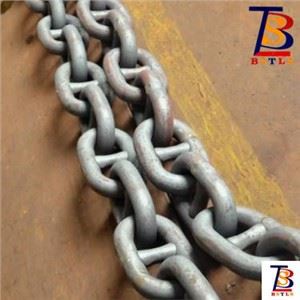


Anchor chains are heavy-duty chains designed to anchor vessels in place. The chains are attached to the vessel's anchor on one end and to the seabed on the other end. The chains are usually composed of multiple links that are welded together to create a strong and durable chain.
Advantages of Anchor Chains
Extremely High Tensile Strength To Handle Heavy Loads
The high carbon or alloy steels used in anchor chain have tensile strengths, allowing each link to withstand loads exceeding one ton without yielding. This gives the whole anchor chain assembly tremendous cumulative holding capacity.
Ability To Flex And Self-Adjust Under Strain
The articulated chain links provide flexibility to bend, twist, and adjust. This allows the chain to distribute forces and absorb shock loads. The flexibility helps minimize localized stress points.
Excellent Corrosion Resistance From Marine Exposure
Hot-dip galvanization or other marine-grade coatings provide durable corrosion protection from continuous exposure to seawater. This maintains strength after years in harsh ocean environments.
Good Abrasion Resistance Against Seafloor Or Dock Contact
The galvanized coatings and large radii link designs resist wear from abrasion when dragged across seabed or docks. This protects against degradation of the steel.
Material Anchor Chains
There are many different types of anchor chains on the market, so it's important to understand the materials used to make each type. Here are some of the most commonly used materials:
Steel: Steel chains are the most widely used anchor chains due to their strength and durability. They are made of high-quality steel that is resistant to wear and tear.
Galvanized Steel: This type of steel is coated with a layer of zinc to prevent rusting, especially in saltwater. Galvanized steel also has excellent strength properties.
Stainless Steel: Stainless steel anchor chains are corrosion-resistant and can last a long time even in saltwater environments. They are perfect for boats that are used frequently in the ocean.
Alloy Steel: Alloy steel anchor chains contain metals like chrome, manganese, and nickel, which increase their strength and durability.
Bronze: Bronze chains are corrosion-resistant, but they are not as strong as steel. They are still useful for smaller boats that need to anchor in calmer waters.
Synthetic Materials: Synthetic fibers like nylon and polypropylene are also used to make anchor lines because they are resistant to rot and mildew. they are not as strong as steel or alloy chains.
If you have a boat that is used in the ocean or large waterways, then you most likely have an anchor. The anchor setup should consist of the anchor chain and rope, with the chain located at the end of the anchor.
As the anchor chain is attached to the anchor end, it helps to keep the rope off the sea floor and from wearing away through rubbing on rocks and debris as the boat moves with the waves and wind.
As the chain is heavy on its own, it helps to hold the anchor line to the bottom so that the pull on the anchor is more horizontal, which reduces the chances of your anchor moving.
When choosing how much anchor chain you need, the general rule is that you should have approximately one foot of anchor chain for every foot of boat length. For example, a 14 foot boat would need 14 feet of anchor chain plus rope.
If you will be anchoring your boat in extreme conditions or for extended periods, you should have about one foot of chain for every six feet of anchor rope. This set up helps to ensure an optimal angle for the anchor on the seabed, making the mooring much more secure.

As seen, the anchor plays a major role in a vessel and offshore operations. it can only function as long as it remains attached to the floating structure.
Considering the tremendous amounts of force applied to the connection between the anchor and the ship during routine berthing or anchoring conditions, conventional methods of securing the anchor will eventually fail under the extensive stress.
The anchor chain refers to the component that attaches the anchor to the boat or structure and is usually referred to as the anchor rode (or anchor cable). It is superior to conventional methods in terms of strength and load-bearing.
The purpose of the anchor rode is to secure the anchor to a part of the vessel in such a manner that it can be easily hauled up when the need arises.
It also plays a major role in absorbing a certain portion of forces away from the main structure and anchor head. For instance, during storms or other similar weather conditions, the vessel or offshore rig tends to pitch and heel. This motion can intensify, causing damage to the vessel.
To dampen these forces, the anchor rode is designed to absorb a certain amount of the load. Since anchor chains and cables are built to withstand large forces on them, they are not drastically damaged or deformed by such loads. This absorption of forces away from the main structure and anchor is known as dampening.
To determine if the length is appropriate, you need to consider the following points. First, you need to remember the distance from the bow of the boat to the water. You need to consider the depth of the water you will be sailing in. Use the navigation chart to learn about maximum depth. Some ships have technology that indicates this information, making it easy for the crew to know if there is enough chain to hold the anchor to the seabed.
You also need to consider the maximum height of the tide. The depth of the ocean is not always the same. Water levels change at different times of the day. It is necessary to know the maximum tidal height for different seasons and days. Once you know the height, add it to the total length of the spool. Once you have a handle on the depth of the water, you can purchase a chain for a 7:1 scope. The chain should be seven times longer than the water depth. This is one of the best ways to estimate the length.
Once you have the chain you need, you need to constantly inspect and maintain it. Keeping it in condition will prevent you from losing your anchor at sea. All the links should evenly fit in the wildcat's recess. Be sure that the end if the chain is attached to your vessel or boat. This is usually done using a spliced-on section of a line that can reach the deck.
What Are The Important Factors To Consider While Selecting The Marine Anchor Chain


When Selecting Or Creating The Anchor Chain, Several Essential Elements Must Be Considered.
‣The highest permissible load should be taken into account.
‣Storage ease must be considered.
‣The rode's expected length should also be considered when selecting an anchor chain.
When it comes to rode designs, it is essential to factor in convenience and ease during storage. Anchor chains need to be placed away carefully so that the hull of the boat is not damaged as a result of an anchor chain being left hanging down too much or entangling itself with other elements around it.
Every ship or offshore station has a good understanding of the depths of their working areas and can therefore determine the length at which the anchor rode should be securely attached.
The scope is a ratio that expresses the relationship between the amount of anchor rode paid out to the actual depth of the water body. It reflects a balance between how much vertical force an anchor exerts on a vessel and how much drift it experiences.
The scope of a ship's anchor chain will usually range from a 5:1 to a 7:1 ratio, meaning that for every one foot of depth in the water, there will be five to seven feet of anchor line. Shorter chains are better at holding the vessel in place since they contain less slack, which helps prevent the waves' natural motions from moving the boat away.
When the chain is released, and the angle between the anchor rode, and the bottom of the vessel is greater than 90 degrees, any sudden impacts or jerks are quickly transferred to both the rode and boat. This means that a more extensive range of motion can be achieved, and any force acting on the boat will begin to reduce in intensity. this allows it to drift into an area far more expansive than initially anticipated.
The main function of the anchor chains is to fix and stabilize the ship. The main is about the following 3 aspects:
For the anchor chain to work, the most basic condition is to hook things on the seabed. If the anchor chain is not long enough, the anchor will not work. If the seabed is flat, or the thing the anchor is hooked on is not fixed, or the hook is not too strong, if it is calm and the waves are still okay. Once the waves are too big, the anchor will not be able to hook things, and the anchor will lose its function.
This is called “anchor moving”. It is very dangerous for the ship to move the anchor during the anchoring period. Because the main engine usually stops when the ship is anchored. If the ship is driven immediately, it will take time. It is very dangerous for an unpowered boat to float around. The concept of anchorages came into being.
The weight of the anchor chain is negligible for the ship, and that little friction will not play a big role. when the ship is anchored, the anchor chain is straight, which is basically negligible friction. If you are by the sea, you will find many small fishing boats whose anchor chains are thick ropes.
The anchor provides the holding force, which is then transferred to the ship through the anchor chain, to resist the effects of external loads from currents and wind waves on positioning. The reason why there is a section close to the seabed is to consider the influence of force. Anchors and anchor chains move easily when straightened. And there is an area close to the seafloor that can provide a certain margin.
Why Can You Use Cable and Anchor Chains Combination
Cable and chain combinations are often used on large cruise ships and offshore structures. Because the chain assembly of the anchor rod is more suitable for use in areas of the seabed that are rough and cannot use cables. The high tensile strength of the steel links within the chain resists the pulling forces on the anchor and ship, maintaining the integrity of its position.
A typical anchor consists of a length of cable, usually made of galvanized steel or stainless steel wire rope, connected to a short length of chain, which is then attached to the anchor. Connecting both types of rides requires the use of specialized technology. Due to its high fragility, most failures occur at the connection between the cable and the chain.
The connection between cable and chain is covered with a galvanized connection, allowing for a safe and reliable interlocking of the two elements. The fiber portion of the cable connects to the chain, creating a stronger bond. It is further enhanced by attaching the cable directly to the chain.
Using this combination of cables and chains has many advantages. Without using this combination in this case, then the single heavy chain element would not remain on the seabed, it would lack the weight to anchor it. Due to the solidity of its connection, this combination can easily withstand strong waves or strong winds , without detaching or displacing from its anchored position on the seafloor.
Anchors provide the necessary holding power when a vessel is anchored in place in a particular area of water or land by using their weight combined with the friction created between them and whatever surface they are being attached to (such as sand or rock).
The anchor chain provides additional holding power by allowing the anchor to move slightly while still keeping it securely attached to the rope/cable line it’s connected to; this movement helps reduce wear and tear on both components by preventing them from becoming too snug against each other due to strong winds or currents that could otherwise cause them to become stuck together over time.
Anchor Chain Market Analysis And Latest Trends
Anchor chain is an important part of the ship's anchoring system. It is a heavy-duty, high-strength chain that connects the anchor to the boat. The chain acts as a flexible link between the anchor and the boat, providing the weight to hold the anchor securely to the seabed.
The anchor chain market is growing steadily due to the increasing demand for recreational boating activities and the development of maritime tourism. The increase in disposable income of people has enabled them to spend more on leisure activities, thereby driving the demand for boats and boat accessories, including anchor chains.
The growing commercial shipping industry, especially in emerging economies, has also stimulated demand for anchor chains. Expansion of maritime trade and demand for efficient anchoring systems for large ships have further boosted the market growth.
Technological advancements play an important role in shaping the ship anchor chain market. Manufacturers focus on developing innovative designs and materials to increase strength, corrosion resistance and ease of operation. Stainless steel and galvanized chains are popular for their durability and rust-resistant properties.
In order to quickly identify the loose length of the anchor chain when throwing up the anchor, and to grasp the length of the anchor chain in the water when starting the anchor, it is necessary to mark each connecting link and its nearby stud links.
The Method Is:
Wrap the metal wire (or white steel ring) on the front and back of the first chain link with a chain link (or shackle) between the first and second sections, and wrap the wire between the two chain links.
The first link is indicated by white paint on the chain link and red paint on the connecting link.
Wrap wire (or white steel ring) around the second stud link between the 2nd and 3rd link on the front and back of the connecting link. And paint white on all the stud links between two chain links, paint red on the connecting links to indicate the second link.
Starting from the connecting link between the sixth and seventh sections, repeat the same method for the first section to the sixth section to mark.
The last one to two sections can be marked with red or yellow paint as a warning that the anchor chain will reach the end of the danger to prevent loss of anchor.
It is crucial to maintain anchor chains properly to ensure their longevity and effectiveness. Routine inspections should be carried out to check for any signs of wear and tear or deformation. Cleaning the chains regularly can also help prevent corrosion and prolong their lifespan. Here are some tips:
Rinse your chain with freshwater after each use to remove salt and prevent rust.
Check your anchor chain for any signs of wear and tear, including bent or broken links, and replace any damaged links immediately.
Lubricate your anchor chain with corrosion-resistant grease to prevent corrosion and rust.
Keep your anchor chain in a dry and well-ventilated place to prevent corrosion.
Before going on a voyage, inspect your anchor chain thoroughly, and ensure that it is in good working condition.
Certifications


Our Factory
Henan Best Chain Industry Co., Ltd. is a national standard [high-precision hoist chain (G80 grade, G100 grade), ordinary rigging chain (G80 grade, G100 grade), etc.], EU standard (EN/80 grade, 100 grade) Chain products, professional R & D, design, manufacturing enterprises. It is a "management advantage and technical advantage" enterprise of high-grade, high-end, multi-variety and multi-spec chain in the north.

