

Chain slings is a type of rigging that is connected by metal chain links. According to its form, there are two main types: welded and assembled. According to its structure, it has monobloc and multibloc and is made of high quality alloy steel. Its long service life and easy bending make it suitable for large and frequent use. Flexible limbs and multiple combinations can improve work efficiency and reduce costs etc.
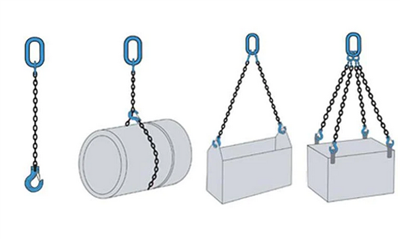
Precautions for using chain sling
1. Develop good lifting habits and plan how to hang, lift and unload before lifting work.
2.Preparation: Determine the weight and center of gravity of the object to be lifted, read the accompanying documents carefully, and mark the lifting point and weight data. Only after determining the center of gravity can the hook be hung in the correct position!
3.The crane operator should be informed of the weight of the object to be lifted.
4.The crane hook should be hung vertically above the center of gravity of the suspended object.
5.Lifting lifting objects should not only avoid damage to the lifting object, but also prevent damage to the rigging itself.
To avoid rotation or falling, the following conditions should be observed:
A) In the case of single-legged rigging, the lifting point shall be located vertically above the center of gravity of the lifting object.
B) In the case of two-legged rigging, the lifting points shall be located on both sides of the lifting object, with the lifting point above the center of gravity.
C) In the case of three-and four-legged rigging, the suspension points shall be located uniformly on the horizontal plane of the center of gravity of the lifting object and above the center of gravity of the lifting object.
Attention must be paid to the lifting angle β (located between the vertical line and the lifting leg): the greater the lifting angle, the lower the lifting capacity. The lifting angle must not exceed 60 degrees!
If three-or four-legged chain rigging is used to lift unevenly distributed objects, the rated load for each leg should be calculated using the two legs with the maximum lifting angle for lifting the object. When the angle of the two legs is different, only one chain should be used to calculate the rated load for each leg to lift the entire lifted object.


